Psychology has long been one of the most popular post-secondary fields in the U.S. The human mind is a complex and engrossing topic to study. Many students with degrees in psychology choose to practice counseling psychology. At DelVal, you can earn an undergraduate degree that is specifically focused on counseling psychology, one of the most popular career paths within psychology. Our curriculum provides foundational knowledge and skills, while offering flexibility in your training. You choose the advanced psychology electives that best fit your interests and goals!
Why Study Counseling Psychology at DelVal?
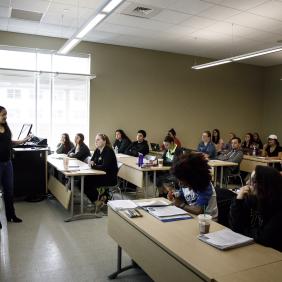
- You will learn in small classes with engaged, supportive faculty. There are no large lecture halls at DelVal.
- Gain in-depth training and practical, relevant skills that will prepare you to make a difference.
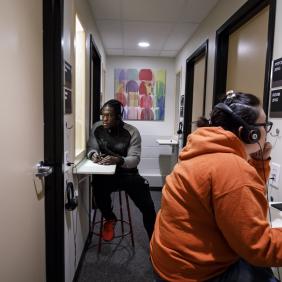
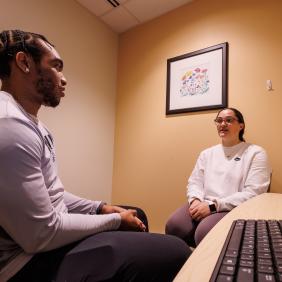
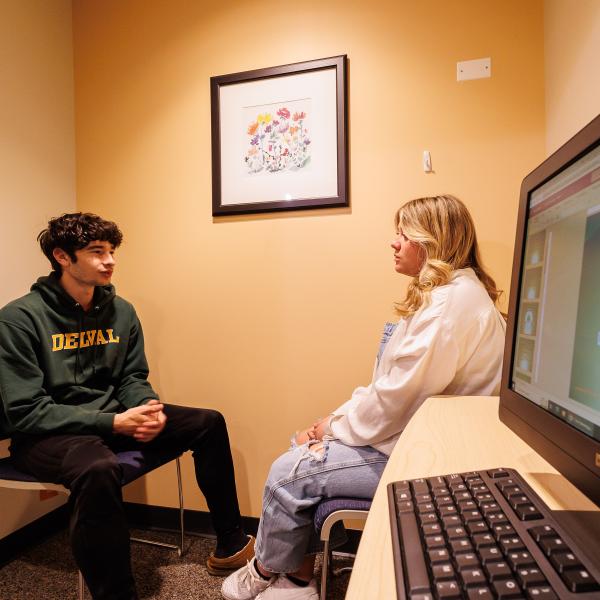
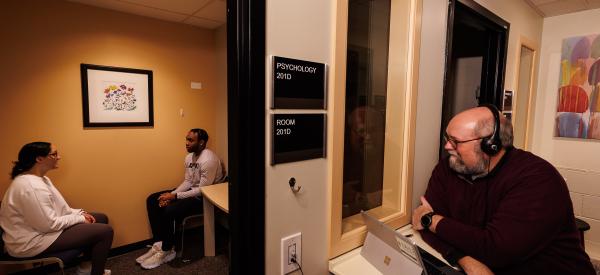
- Participate in mock counseling sessions in our state-of-the-art counseling psychology laboratory where students receive live feedback from experienced faculty as they practice and develop counseling skills.
- Have the opportunity to create your own independent research projects or assist faculty members with their research studies. Some students have co-authored studies with a faculty member.
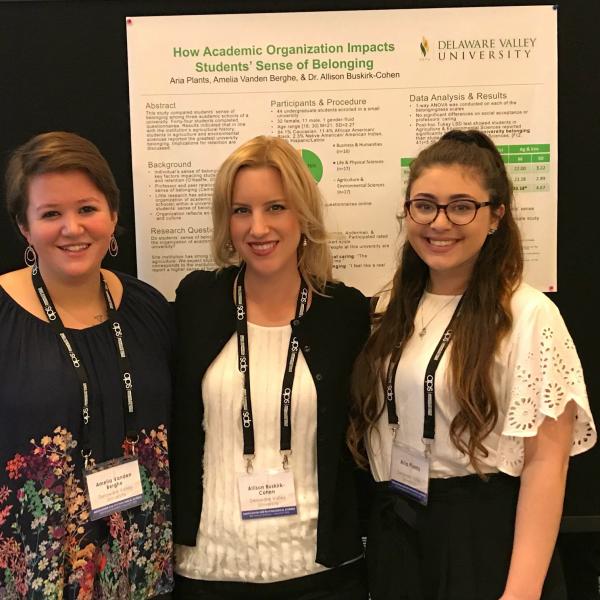
- Present your research or participate at national conference, such as the Association for Women in Psychology, the Pennsylvania Counseling Association and the Association for Psychological Science.
Recognized
by Best Psychology Degrees

$30,100
average scholarship and grant amount awarded to freshmen in 2025-26
18
Average class size

COUNSELING PSYCHOLOGY AT-A-GLANCE
We offer a unique opportunity for students who are interested in understanding the human psyche and helping others. Unlike general psychology programs offered at other schools, our specialized program provides you with advanced training in counseling psychology so that you are prepared to join the mental health profession.
Sample Courses:
- Multicultural Issues in Psychology
- Introduction to Counseling Techniques
- Professional Psychology
- Introduction to Behavior Modification
- Biological Science I and II
- Multicultural Issues in Psychology
- Lifespan Development
- Introduction to Counseling Theories
- Abnormal Psychology
- Methods of Psychological Research
Recommended Minors
- Business Administration
- Communication
- Policy Studies
- Writing Minor
- Criminal Justice
Sample Course Descriptions
This course will impart a basic understanding of psychological concepts about identity and culture and how they affect interactions with others. The course focuses on a multicultural perspective for understanding and working with diverse populations, and will examine theoretical and research literature concerning gender, race/ethnicity, relation, etc. in the provision of psychological services.
This course includes information relating to stages in the counseling process, interviewing skills, counseling objectives, and appropriate strategies. Students actively learn various counseling techniques using the mediums of role playing, peer critiques, videotaping, and discussions. Ethical considerations are emphasized.
Under faculty direction, students explore the profession of psychology focusing on the research and practice of mental health. This course is paired with a general psychology conference that provides a basic structure for the course. A new topic is explored weekly so that students gain exposure to a variety of aspects relating to psychology. Additionally, students are encouraged to submit proposals to the psychology conference, though not required. Students interested in
enrolling in this course but who are unable to travel for the conference should obtain permission from the instructor.
An introduction to the concepts, theories and applications of learning theory and behaviorism as they are applied to a variety of treatment conditions and applications in a variety of settings, with special emphasis on school settings.



It was exceptionally helpful to have taken courses that not only prepared me for my graduate program, but gave me skills that I still utilize today as a therapist in private practice. Most importantly, the program helped me form lifelong relationships that have helped me grow both personally and professionally.
Kyla Dannelke '21 | B.A. Counseling Psychology


Much More Than an Internship Program
The Experience360 Program gives you the opportunity to apply classroom lessons to real-world experiences in the field of counseling psychology. In addition to valuable internships, E360 includes career exploration including hiring trends and salaries, opportunities for student research, week-long study abroad, leadership development and community service.
Featured Persons


Keep us updated!
American Psychological Association Learning Outcomes
In alignment with the goals set forth by the American Psychological Association (APA), students in the Counseling Psychology major should achieve the following learning outcomes:
Goal 1. Knowledge Base
Students will
1.1 Describe key concepts, principles, and overarching themes in psychology
1.2 Develop a working knowledge of psychology’s content domains
1.3 Describe applications of psychology
APA Goal 2. Scientific Inquiry and Critical Thinking
Students will
2.1 Use scientific reasoning to interpret psychological phenomena
2.2 Demonstrate psychology information literacy
2.3 Engage in innovative and integrative thinking and problem solving
2.4 Interpret, design, and conduct basic psychological research
2.5 Incorporate sociocultural factors in scientific inquiry
APA Goal 3. Ethical and Social Responsibility in a Diverse World
Students will
3.1 Apply ethical standards to evaluate psychological science and practice
3.2 Build and enhance interpersonal relationships
3.3 Adopt values that build community at local, national, and global levels
APA Goal 4. Communication
Students will
4.1 Demonstrate effective writing for different purposes
4.2 Exhibit effective presentation skills for different purposes
4.3 Interact effectively with others
APA Goal 5. Professional Development
Students will
5.1 Apply psychological content and skills to career goals
5.2 Exhibit self-efficacy and self-regulation
5.3 Refine project-management skills
5.4 Enhance teamwork capacity
5.5 Develop meaningful professional direction for life after graduation
Dr. Matthew Mutchler, Chair, Department of Counseling Psychology, Professor
Office Location: Lasker 304
POV of Counseling Psychology Students